Software Development
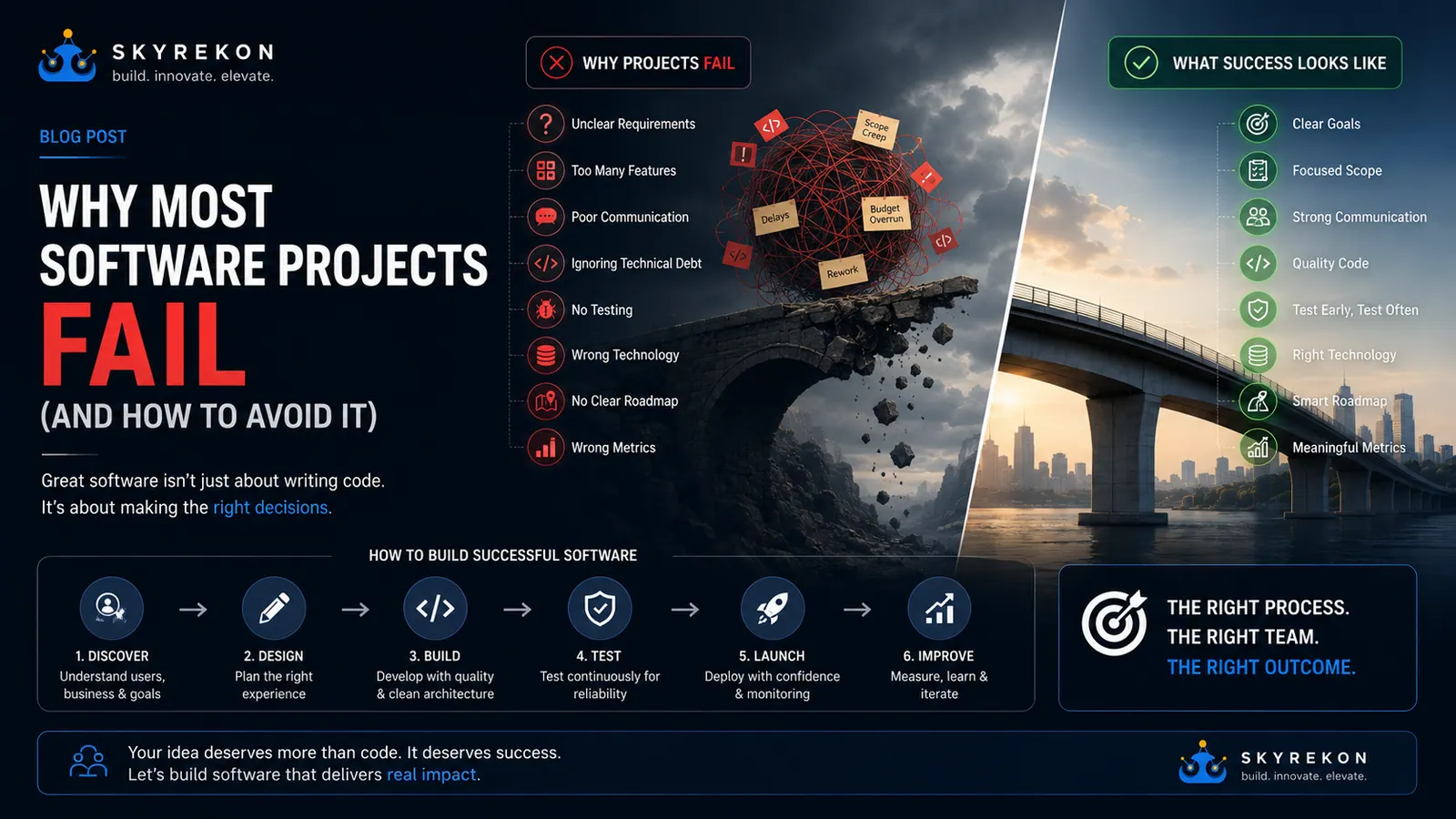
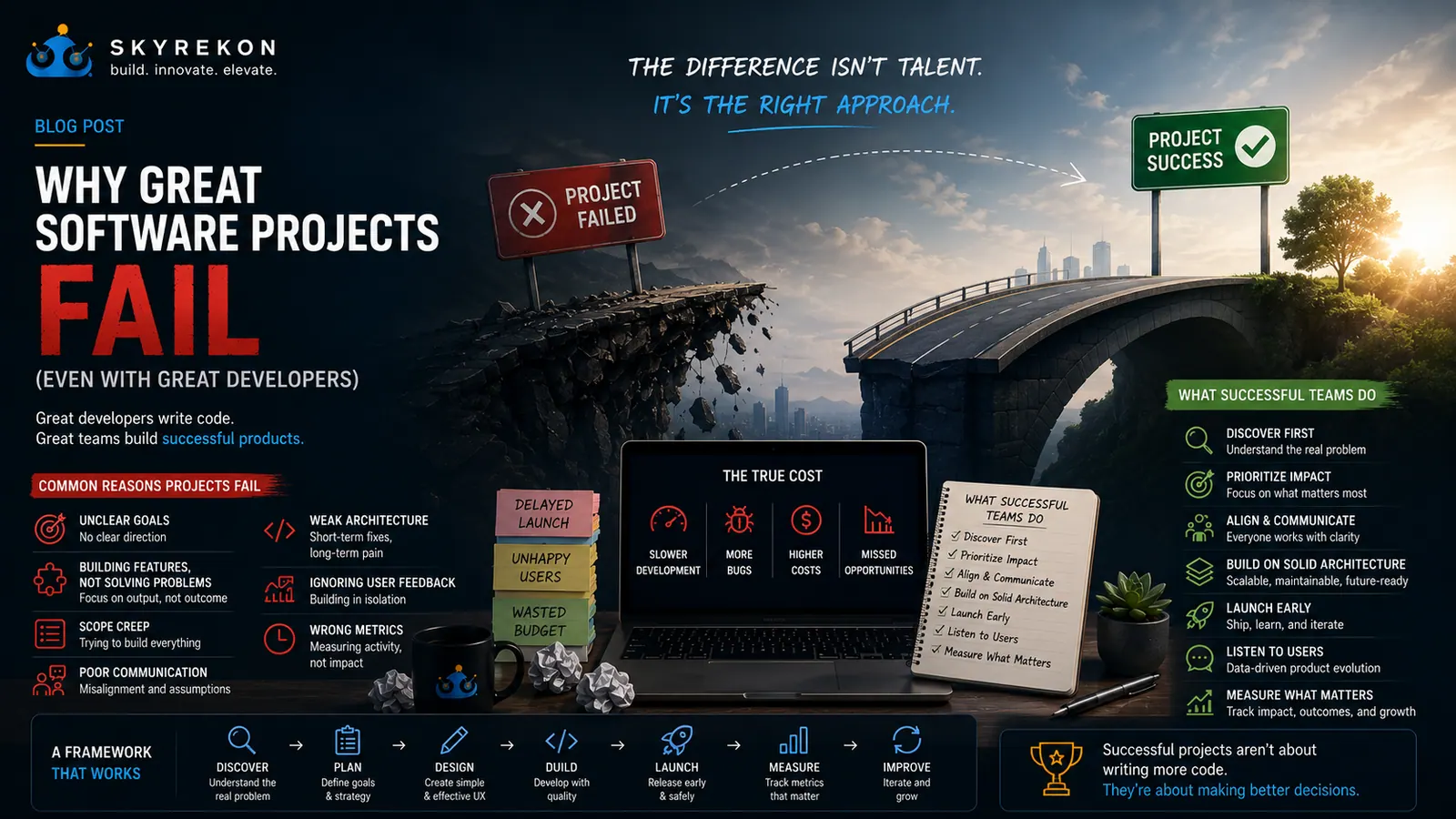
Why Great Software Projects Fail (Even With Great Developers)
Even the most talented engineering teams can build products that fail. Discover the real reasons software projects fail and how successful companies avoid them.
Many failed software products have one thing in common.
They weren't built by bad developers.
They were built by talented teams solving the wrong problems.
Great software isn't created by writing more code.
It's created by making better decisions.
After working with startups and growing businesses, we've seen the same patterns appear repeatedly.
The good news?
Most project failures are preventable.
Failure Starts Long Before Development
Many people think projects fail because of:
- bugs
- performance issues
- security problems
Those certainly hurt.
But most projects fail months before the first line of code is written.
The real causes are usually:
- unclear goals
- poor planning
- changing priorities
- lack of communication
- building unnecessary features
Technology rarely kills products.
Decision-making does.
Mistake 1: Building Features Instead of Solving Problems
Founders often ask:
"We need chat."
"We need AI."
"We need dashboards."
The better question is:
What customer problem does this solve?
Customers don't buy features.
They buy outcomes.
Every feature should have a measurable purpose.
Mistake 2: No Clear Product Vision
If you ask five team members:
"What are we building?"
You should hear the same answer.
If everyone gives a different answer...
the project already has a problem.
Every successful product starts with:
- clear objectives
- measurable success metrics
- defined target users
Without them, development becomes guesswork.
Mistake 3: Trying to Build Everything
This is one of the biggest startup mistakes.
A roadmap filled with:
- AI
- Notifications
- Reports
- Mobile apps
- Payments
- Analytics
- Marketplace
- Community
- Integrations
looks impressive.
It also delays launch by months.
Successful companies launch one valuable feature.
Then improve it.
Mistake 4: Poor Communication
Projects slow down when communication breaks.
Developers need clarity.
Designers need context.
Founders need visibility.
Without shared understanding:
- assumptions increase
- bugs increase
- rework increases
Clear communication is one of the highest ROI investments any engineering team can make.
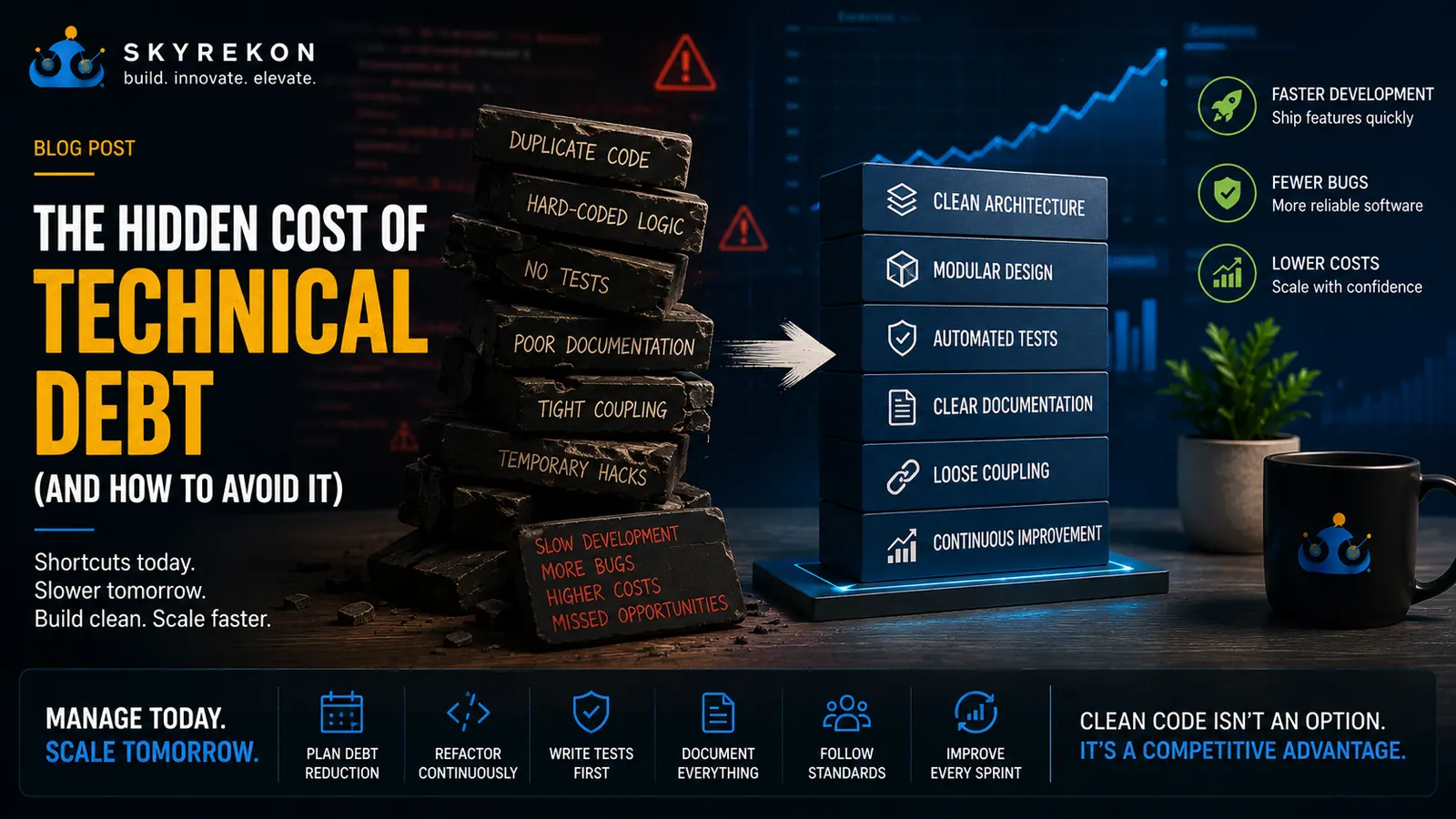
Mistake 5: Ignoring Technical Architecture
Quick decisions become permanent architecture.
Examples include:
- tightly coupled services
- duplicated logic
- inconsistent APIs
- missing documentation
- no automated testing
Eventually:
every new feature becomes harder.
Architecture should support growth—not fight against it.
Mistake 6: No User Feedback
Many teams spend months building.
Then finally ask users:
"What do you think?"
By then it's too late.
Instead:
Build.
Launch.
Measure.
Improve.
The best roadmap comes from customers—not assumptions.
Mistake 7: Measuring Progress Incorrectly
Many companies celebrate:
- lines of code
- completed tasks
- closed tickets
Those metrics don't matter.
Better metrics include:
- customer retention
- activation rate
- conversion rate
- deployment frequency
- user satisfaction
- feature adoption
Shipping software isn't success.
Creating value is.
What Successful Teams Do Differently
Great teams aren't faster because they work longer.
They're faster because they waste less effort.
They focus on:
Discovery
Understand the real problem before designing solutions.
Prioritization
Only build what delivers measurable value.
Engineering Discipline
Clean architecture.
Automated testing.
Documentation.
Continuous improvement.
Continuous Delivery
Release small improvements regularly.
Large releases create unnecessary risk.
Customer Feedback
Every launch generates new learning.
Products evolve based on evidence—not opinions.
Software Development Is Risk Management
Every project contains uncertainty.
The goal isn't eliminating risk.
It's reducing risk continuously.
That means validating ideas before scaling investment.
Our Approach at Skyrekon
Every project begins with one question:
What business outcome are we trying to create?
From there we focus on:
- Product discovery
- Technical architecture
- UX design
- Agile development
- Cloud infrastructure
- Quality assurance
- Continuous deployment
Technology is only one part of building successful software.
Process matters just as much.
A Simple Framework
Successful products usually follow this sequence:
Discover
↓
Plan
↓
Design
↓
Build
↓
Launch
↓
Measure
↓
Improve
↓
Repeat
Skipping any step increases project risk.
Final Thoughts
The difference between successful and unsuccessful software projects rarely comes down to developer talent.
It comes down to clarity.
Clear goals.
Clear priorities.
Clear architecture.
Clear communication.
The best engineering teams don't just build software.
They build confidence that every release moves the business forward.
Building Your Next Product?
Whether you're launching an MVP, modernizing an existing platform, or scaling enterprise software, Skyrekon helps companies deliver products that solve real business problems—not just ship more features.
Tags
- Software Development
- Product Management
- Engineering
- Project Management
- Startups
Building something similar?
Skyrekon partners with teams on AI-native products, platforms, and engineering systems — from discovery through production.